

Oxygen Barrier Reflective Films for Hydronic Underfloor Heating
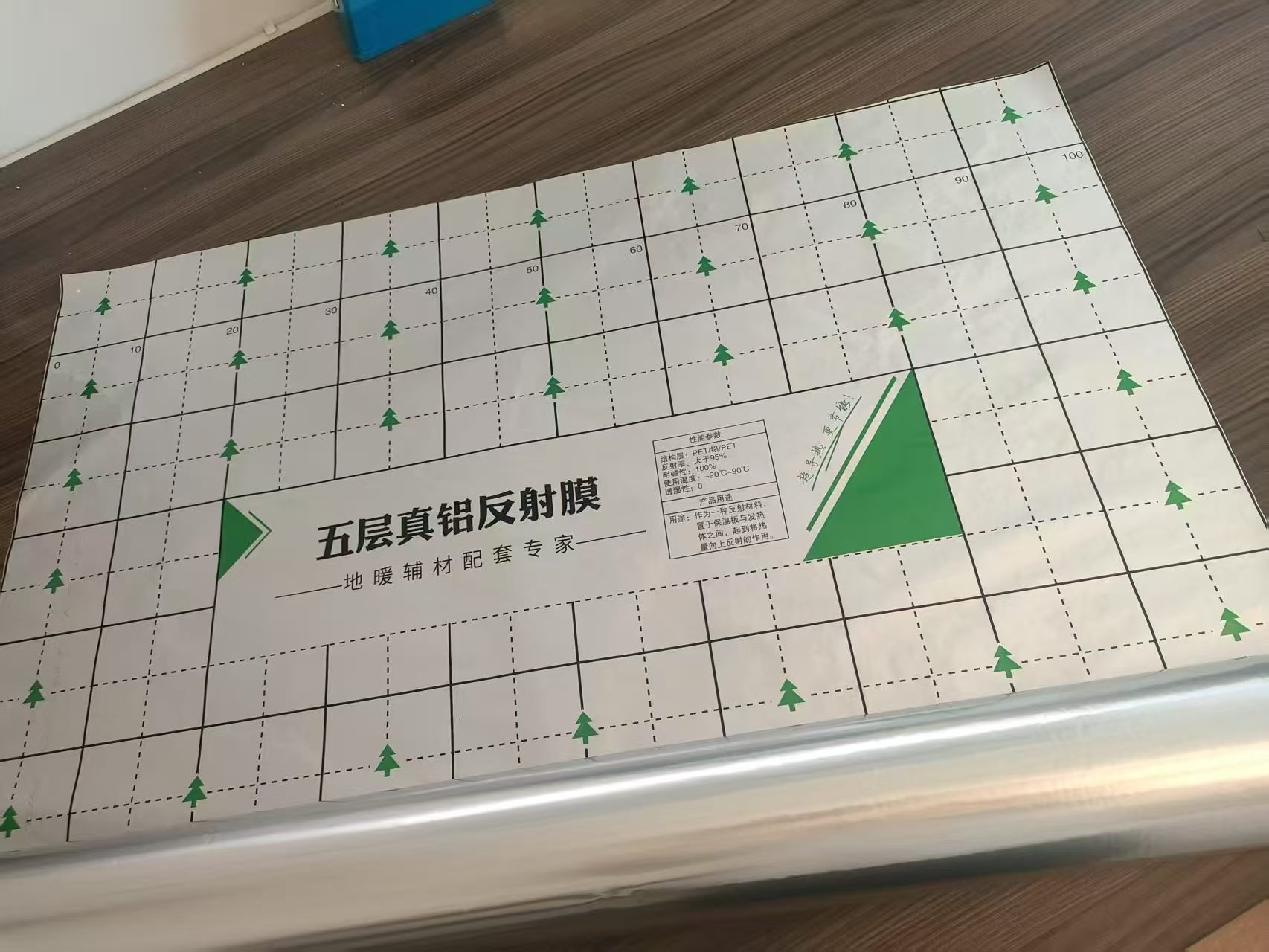
In hydronic underfloor heating systems, the fluid inside the pipes carries heat across entire floor slabs. Left exposed to dissolved oxygen over months and years, that fluid gradually attacks the metalwork. Five-layer oxygen-barrier reflective films were developed specifically to stop that process — and they add a radiant-heat reflection benefit on top. If you are specifying or installing hydronic radiant floor heating, understanding what these films do and why the barrier layer matters will save you expensive callbacks.
How Dissolved Oxygen Damages Hydronic Systems
Water always holds some dissolved oxygen. Even in a closed-loop system, the heat-transfer fluid picks up trace gas molecules every time the system cycles, the expansion tank breathes, or the system is topped up. That oxygen reacts with ferrous surfaces — carbon steel pipes, cast-iron manifolds, some boiler heat exchangers — forming iron oxide scale. Scale builds up inside the pipe bore, reducing flow area and raising pump head. It insulates the inside wall, forcing the boiler to work harder. In severe cases, pitting corrosion creates leaks behind finished floors. Repairing a slab-embedded leak is never cheap. Preventing it is the whole point of an oxygen-barrier film.
The Five-Layer Film Structure and How the Barrier Works
A typical five-layer oxygen-barrier reflective film arranges its materials like this: outer polyethylene (PE) skin, then a layer of aluminum foil, then a core of EVOH (ethylene-vinyl alcohol copolymer), then another aluminum layer, then another outer PE skin. EVOH is the key. Its molecular structure is dense and non-porous — oxygen molecules simply cannot diffuse through it at normal operating temperatures. Sandwiched between two PE layers, the EVOH core forms a tortuous path for any gas that tries to penetrate. The result is an oxygen transmission rate (OTR) measured in cubic centimeters per square meter per day (cc/(m²·day)), orders of magnitude lower than a standard PE/foam product. The woven PE core gives the film structural integrity and tensile strength so the product survives site handling and rough-sawn timber nail-ups. The outer aluminum facings provide the reflective surface and complete the barrier on both faces.
Where Oxygen-Barrier Films Matter Most
These films earn their cost in several common situations. Any hydronic system running on hard-water makeup is at elevated risk — calcium and magnesium ions accelerate the oxidation chain. Systems using glycol mixtures are particularly vulnerable because glycol is hygroscopic and pulls in trace moisture that carries oxygen. Older installations with cast-iron boilers and steel manifolds face higher oxidation loads than modern setups where some condensing boilers use stainless or aluminum heat exchangers. But many retrofit projects combine new condensing boilers with existing ferrous distribution manifolds — a mixed-age system where the barrier film protects the older components the new boiler feeds. Five-layer oxygen-barrier reflective films are most commonly specified in those transitional or hard-water scenarios.
Radiant Heat Reflection — The Second Benefit
The aluminum outer layer reflects long-wave radiant heat back toward the floor slab. In a standard screed-covered installation, this is a secondary benefit — screed has high thermal mass and conducts heat upward regardless. But in wooden-joist or suspended-panel systems, radiant reflection makes a measurable difference. Unreflected downward heat disappears into the subfloor void, and the floor surface takes longer to reach setpoint. The reflective face bounces that energy back upward, shortening warm-up time and reducing the energy the boiler must supply. A factory quality-control check on emittance (ASTM C1371 is the relevant test method) tells you how much of the radiant load the surface actually reflects rather than absorbs. High emittance values mean the film is doing its job at both ends: protecting the pipe and pushing heat where you want it.
Installation Details That Affect Performance
The foil face goes toward the heat source — that is, facing the heating pipes. Seams should be overlapped and sealed with aluminum foil tape to maintain vapor continuity across the membrane. Some manufacturers specify the orientation of the oxygen-barrier side relative to the subfloor; others build it as an integrated product where the orientation is fixed. Check the factory data sheet before you lay it. The film must lie flat with no creases that could create a thermal bridge. In timber-frame floors, a thin cushioning layer beneath the film reduces impact noise from foot traffic and protects the aluminum skin from sharp timber arrises during installation.
Choosing the Right Oxygen-Barrier Reflective Film
When evaluating five-layer products, ask for the OTR figure and the test temperature. Lower OTR numbers are better, but they must be stated at a relevant temperature — 40 °C is common, though some systems run hotter. Ask the manufacturer for third-party test data under ASTM E96/E96M and cross-reference with ASHRAE Handbook thermal performance values. A reputable supplier will provide batch-level documentation without hesitation. Five-layer oxygen-barrier reflective films solve a specific problem — they stop oxygen from reaching the heat-transfer fluid — and they do it in a single product that also reflects radiant heat back into the room. For hydronic underfloor heating, that combination is hard to beat.
References
American Society of Heating, Refrigerating and Air-Conditioning Engineers. (2021). ASHRAE Handbook—Fundamentals, Chapter 26: Heat, Air, and Moisture Control in Building Assemblies. ASHRAE.
ASTM International. (2023). ASTM E96/E96M-23: Standard Test Methods for Gravimetric Determination of Water Vapor Transmission Rate of Materials. ASTM International.
Reflective Insulation Manufacturers Association International. (2014). Understanding and Using Reflective Insulation, Radiant Barriers and Interior Radiation Control Coatings. RIMA-I.
ASTM International. (2021). ASTM C1371-15(2021): Standard Test Method for Determination of Emittance of Materials Near Room Temperature Using Portable Emissometers. ASTM International.