

Five-Layer Oxygen Barrier Reflective Insulation Film for Underfloor Heating
Hydronic underfloor heating systems have earned their reputation as one of the most comfortable and efficient ways to heat a building. But even the most well-engineered system can suffer from reduced performance and premature failure if one critical component is overlooked: the oxygen barrier. An oxygen barrier reflective insulation film sits at the intersection of thermal performance and system protection, and for contractors, engineers, and procurement managers selecting materials from a manufacturer or factory, understanding what this component does—and what separates a quality product from a mediocre one—can make a measurable difference to the longevity of an installation.
What Is an Oxygen Barrier and Why Does It Matter in Wet Heating Systems?
In a hydronic (wet) underfloor heating system, heated water or a glycol-based solution circulates through a network of pipes embedded in or beneath the floor structure. These pipes are typically ferrous or steel-reinforced, and they are in constant contact with the circulating fluid. Oxygen molecules dissolved in that fluid are a quiet but persistent threat: over time, dissolved oxygen accelerates corrosion on the inner surfaces of ferrous pipe components, creates sludge buildup, and degrades the heat transfer efficiency of the glycol solution. This process does not announce itself with a dramatic failure—it unfolds gradually, manifesting as reduced flow rates, cold spots, and eventually costly pipe replacement.
An oxygen barrier addresses this directly. Applied as a laminated film layer to the insulation substrate beneath heating pipes, it restricts the permeation of atmospheric oxygen into the system from below. The key metric here is the Oxygen Transmission Rate, or OTR, measured in cubic centimetres per square metre per day (cc/m²·day). A properly specified oxygen barrier film should achieve an OTR below 0.1 cc/m²·day, a level that effectively halts the diffusion of oxygen into the circulating medium. Industry guidance, including standards for pre-insulated bonded pipe systems used in district heating applications, recognises the importance of minimising oxygen ingress as a fundamental requirement for system durability.
Understanding Five-Layer Construction
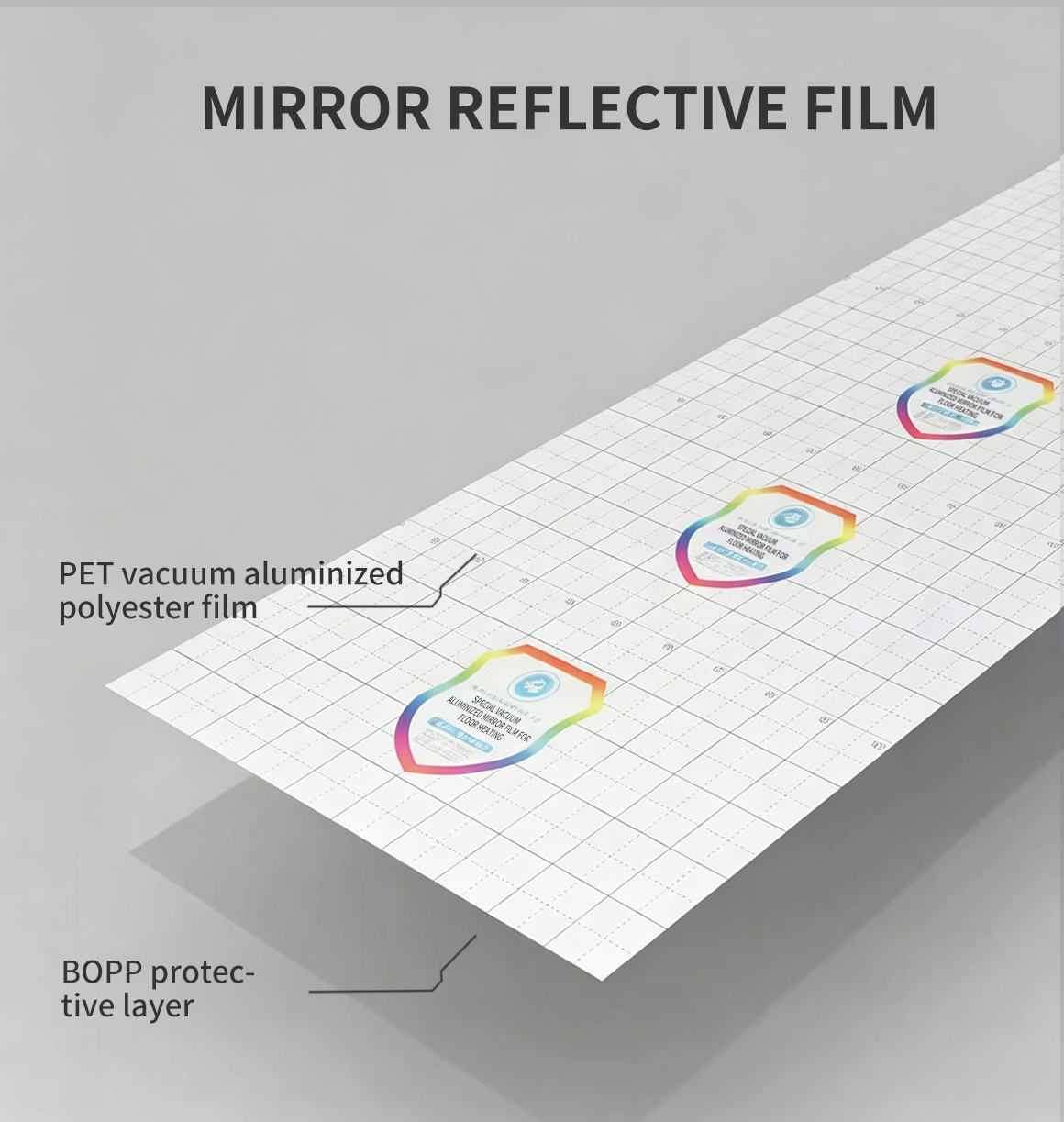
The term "five-layer" refers to a laminated structure in which distinct functional films are bonded together to create a single robust sheet. While exact compositions vary between manufacturers and factories, a typical high-performance five-layer oxygen barrier reflective insulation film comprises the following functional layers:
The outermost layer is a durable polyethylene or polypropylene skin that provides mechanical protection during handling and installation. Beneath this, a metallised aluminium layer delivers high infrared reflectivity—typically above 90%—redirecting radiant heat upward toward the occupied space rather than allowing it to escape downward into the subfloor. Sandwiched between and around this reflective layer are one or two adhesive lamination layers that bond the structure and ensure the film maintains its integrity under sustained thermal cycling. The innermost layer, in direct contact with the insulation board or subfloor, often incorporates a coextruded polyamide or ethylene-vinyl alcohol (EVOH) core that delivers the oxygen barrier performance.
This multi-layer approach is fundamentally different from single-layer reflective foil. A single foil sheet may offer decent thermal reflectivity, but without a dedicated barrier layer, oxygen and water vapour can gradually pass through microscopic pinholes or micro-cracks that develop during installation. The five-layer laminated construction distributes mechanical stresses across the structure, resists delamination, and maintains both its reflective and barrier properties over decades of thermal cycling.
Key Benefits for System Longevity
The primary benefit of a properly specified oxygen barrier reflective film is corrosion protection for ferrous system components. By preventing oxygen from reaching the pipe surface, the film extends the operational life of the entire hydronic loop, reducing maintenance frequency and protecting the investment in the heating infrastructure.
Secondary benefits are equally significant. The reflective aluminium layer improves thermal distribution uniformity across the floor slab, which means the system operates at a slightly lower water supply temperature for the same comfort level—an efficiency gain that translates directly into lower energy consumption over the life of the installation. The vapour-blocking properties of the barrier layer also prevent moisture from condensing on cold surfaces beneath the floor, a condition that can lead to mould growth and structural deterioration in severe cases.
For developers and property managers, specifying a five-layer oxygen barrier film from a reputable manufacturer signals a commitment to build quality. These materials are not a large line item in a project budget, but their absence or inferior quality is among the most common causes of underfloor heating system failure documented in building performance surveys.
Installation Over Insulation Boards
In practice, the oxygen barrier reflective film is installed directly over rigid insulation boards—typically expanded polystyrene (EPS) or extruded polystyrene (XIPS)—before the heating pipework is laid. The film is rolled out in sheets, with edges overlapped by a minimum of 50–100 mm and taped at the seams using a self-adhesive aluminium foil tape to create a continuous, sealed surface across the entire floor area.
Careful seam taping is essential: even a small gap in the oxygen barrier defeats its purpose by allowing unrestricted oxygen ingress at that point. A quality installation follows a systematic layout pattern, working from one corner of the room toward the exit to avoid disturbing already-laid film. Pipe retention clips or staples are then fixed through the film into the insulation board below, securing the pipework in a serpentine pattern at the prescribed spacing.
Ensuring Consistent OTR Specifications from the Factory
For buyers sourcing from a manufacturer or factory, the most important question is not just whether a film has a low OTR, but whether every roll produced meets that specification consistently. A reliable factory implements statistical process control throughout the lamination process, with in-line sensors monitoring coating weight, extrusion temperature, and bond strength on every produced metre. Batch-level testing using calibrated gas transmission rate analysers provides documented OTR values for each production run, giving buyers traceability and confidence that the material arriving on site conforms to the specified performance envelope.
Material certifications from third-party testing laboratories—including measurements of tensile strength, peel adhesion, thermal resistance, and oxygen transmission rate—provide an additional layer of assurance. Any manufacturer serious about supplying into professional hydronic heating markets will maintain these certifications and make test data available on request.
References
BS EN 15632:2010. District heating pipes — Pre-insulated bonded pipe systems. BSI.
VTT Technology 289. (2017). Long-term performance of district heating pipes. VTT Technical Research Centre of Finland.