

Underfloor Heating Response Time and Thermal Mass: What Affects Warm-Up
When a homeowner asks how quickly the floor feels warm after the system switches on, they are really asking about response time. That one figure shapes comfort, running cost, and the control setup you should fit. We are a Chinese manufacturer of underfloor heating insulation materials, and in our factory we produce the boards and panels that sit beneath the pipes and cables. Because we supply both build types, we see daily how the layer under the floor decides whether a room warms in minutes or in hours. Understanding the physics helps a specifier choose the right product before the screed is poured.
What "Response Time" Actually Means
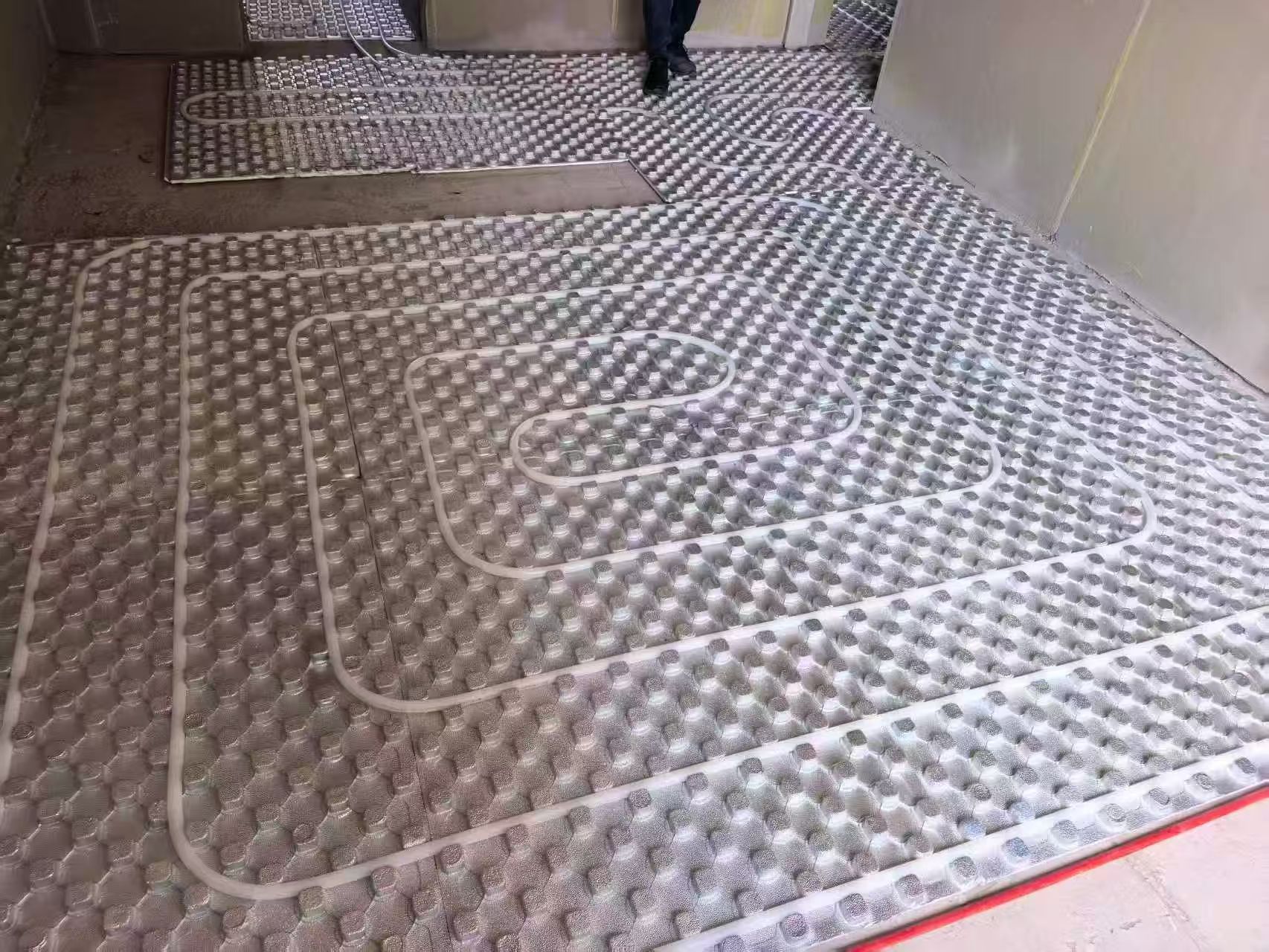
Response time is the interval between switching the heating on and feeling warmth at the floor surface. Water-based underfloor heating is slow because the heat must first travel through the water, then into the screed slab, then up into the room. The slab is the bottleneck. Electric mat systems skip the water stage and warm the surface directly, so they feel warmer sooner, though the floor still holds less stored energy. Dry systems built on panels with the pipe snapped into a pre-formed route respond quickest of all, because there is almost no heavy mass to heat. A supplier should be honest about these differences rather than quoting a best-case number that only applies to a thin dry build.
The Role of Thermal Mass
Thermal mass is the ability of a material to absorb and hold heat. A thick screed has plenty of it. Once it is warm, it releases heat slowly and keeps the room steady through the night and during price spikes. That makes it ideal for homes on a tariff that charges less at night, because you can heat the slab on cheap electricity and let it coast through the day. The trade-off is poor agility. If the sun comes out or the family goes out, that stored heat is already committed and cannot be withdrawn quickly. For a household that wants a floor reacting the moment they press a button, high thermal mass works against them.
How Screed Thickness Changes the Equation
Screed thickness is where theory becomes practical. A standard 50 to 70 millimetre screed laid over the pipes can take several hours to reach temperature on a cold start. The deeper the slab, the more energy it soaks up before the surface moves. Place the same pipe in a thin self-levelling overlay of 15 to 20 millimetres, or in a dry panel system, and warm-up drops to minutes. A designer choosing between a solid concrete build and a lightweight renovation is really choosing between a slow thermal battery and a quick-response surface. Our factory makes insulation boards for both routes, so the decision is about behaviour, not availability.
Why Insulation Changes Everything
Insulation beneath the pipes is the quiet variable that most people miss. Heat travels both up and down, and without a good barrier a large share leaks into the slab below. A well-insulated floor sends that lost downward energy back upward, so more of the input reaches the room. The practical effect is faster warm-up and a lower flow temperature needed to hit comfort. Because the slab never has to run as hot, even a thick build responds sooner than the same build on poor insulation. As an insulation materials manufacturer, we treat the layer beneath the pipe as the foundation of the whole system, not an afterthought.
Stored Heat Versus Immediate Output
It helps to separate two ideas. Immediate output is the warmth you feel now, straight from the pipe or cable. Stored heat is the reservoir built up in the screed over hours. A fast system gives you immediate output but little storage, so it cools quickly when switched off. A slow system gives you less immediate output but a deep store that keeps paying back long after the pump stops. Neither is wrong, they suit different rooms. A bathroom used for twenty minutes benefits from immediate output; a living room occupied all evening benefits from storage.
Matching Control Strategy to Thermal Behaviour
Control should follow the physics. Slow, high-mass systems reward setback scheduling, where you let the temperature drift down overnight and allow hours to recover. They also pair well with weather compensation, which adjusts flow temperature to outside conditions and keeps the slab charged. Fast, low-mass systems suit on-demand control, where you switch on shortly before use and off when you leave. Fitting the wrong strategy wastes money: calling for a fast recovery from a heavy slab cannot happen, and leaving a quick system running all day burns far more than needed.
One Manufacturer, Two Thermal Behaviours
This is where a supplier with a broad catalogue earns its place. We manufacture thick, high-density insulation boards for builders who want a stable, store-and-release floor, and we also produce quick-response dry panels for renovations and rooms that need on-demand warmth. Because one manufacturer can supply both, a designer is free to specify different thermal behaviour for different rooms in the same project, instead of forcing the whole house into one mould. The right answer is rarely a single product; it is the right product in the right room.
References
BS EN ISO 13786:2007. Thermal performance of building components — Dynamic thermal characteristics — Calculation methods. BSI.
ASHRAE Handbook — Fundamentals. ASHRAE, Atlanta.
EN 1264-3:2009+A1:2012. Water based surface embedded heating and cooling systems — Part 3: Optimised energy use. CEN, Brussels.