

Choosing the Right Reflective Film Thickness for Underfloor Heating
Not all reflective insulation films are created equal, and the thickness you choose can make the difference between a system that heats quickly and one that wastes energy for years. A supplier that understands manufacturing constraints will offer a range of thickness options for good reason: different floor builds demand different solutions. Here is what drives that choice.
What Thickness Actually Means in a Reflective Film
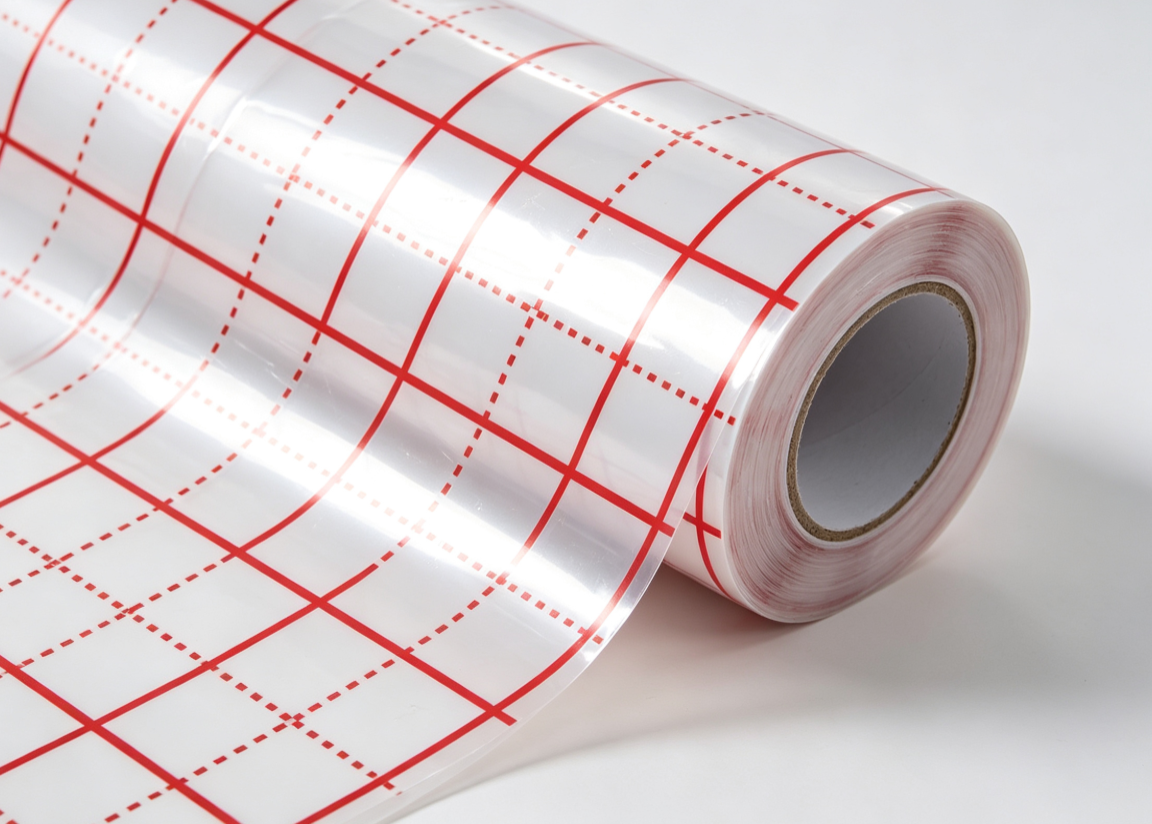
When people talk about reflective film thickness, they usually mean the total caliper of the product — the aluminum layer plus any polymer or foam backing. Pure aluminum foil used in reflective insulation is astonishingly thin. Household-grade foil might be just 7–12 microns (0.007–0.012 mm). Industrial-grade reflective film from a factory production line typically uses 12–25 micron aluminum, which is noticeably more robust and less prone to tearing during installation. The aluminum layer alone does not need to be thick to reflect infrared radiation effectively, but it does need to be continuous and free of pinholes.
Thin Foils vs. Foam-Backed Films
A bare aluminum foil, even at 25 microns, provides almost no resistance to conductive heat flow. Its job is purely radiative — it reflects. If you are laying a reflective film directly against a concrete slab with no additional insulation below, a thin foil alone will not prevent conductive heat loss through the concrete. You need either a thick concrete slab to act as a thermal mass, or a composite product that adds a foam layer to the assembly. Foam-backed reflective films combine a low-emittance foil face (typically 12–15 micron aluminum) with a closed-cell polyethylene or polypropylene foam core ranging from 3 mm to 10 mm thick. The foam layer provides conduction resistance while the foil face handles radiation. Neither works as well alone.
Floor Build-Up Height: The Critical Constraint
In new-build projects, there is usually room to accommodate a full insulation package. In retrofit situations, every millimetre of build-up height counts — especially when you are trying to meet a finished floor level that already exists. If you are replacing an existing floor finish and the new system must fit under the same door clearance, you may have only 15–20 mm of total depth to work with. In that scenario, a 3 mm foam-backed reflective film might be your only realistic option, and you would need to ensure the substrate below is reasonably well insulated already. A supplier offering custom thickness options will help you find the right balance when headroom is tight.
Matching Film to Pipe Spacing and Heat Output
Underfloor heating systems operate at different flow temperatures depending on the heat source. A heat pump typically runs at 35–45°C, while a gas boiler might run at 50–60°C. The pipe spacing also varies: 100 mm centres deliver more heat per square metre than 200 mm centres. These factors affect how much downward heat loss is acceptable before the system performance degrades noticeably. High-output systems with tight pipe spacing can tolerate a thinner insulation layer because the heat flow is strong enough to maintain floor surface temperature even with some downward losses. Low-temperature systems, especially heat pump installations, need a more robust insulation package — often a 5–8 mm foam-backed film or a foil over a rigid insulation board — to prevent the floor from feeling lukewarm.
The Five-Layer Oxygen-Barrier Films
One product category worth knowing about is the five-layer oxygen-barrier reflective film. These products sandwich a thin aluminum core between multiple polymer layers, with an oxygen-barrier coating to prevent gas diffusion through the film over time. Total thickness on these products typically runs 4–6 mm. The oxygen barrier is particularly valuable in wet screed applications where cement hydration can degrade a plain foil over months or years. Factory supply chains for these products have tightened in recent years as raw material costs fluctuate, but they remain the preferred choice for long-term commercial installations where access for maintenance is limited.
Thermal Resistance and the R-Value Question
Reflective insulation films do not carry a conventional R-value in the same way that mineral wool or rigid foam boards do. ASTM C1224-22 covers the specification for reflective insulation in building applications, and it requires manufacturers to declare thermal performance based on a defined test configuration, including the air space. This matters for specification: you cannot simply add up R-values from a reflective film and a foam layer and call it done. The radiant reflection benefit depends on the air gap configuration, which changes with installation. Always specify reflective film performance in the context of the actual air space that will exist in your build-up.
Making the Selection: A Practical Checklist
Start by measuring your available build-up depth. Then check the subfloor insulation status — if the concrete below is uninsulated, prioritize a foam-backed film with the thickest foam layer that fits. For timber suspended floors, a thin foil with a reflective face on both sides often works well because there is natural air movement in the void. For solid floors, choose a foil-faced-up configuration with as much foam backing as the depth allows. If the project involves a heat pump system, err toward the thicker end of the range. And always ask your supplier for the declared thermal performance data from an accredited test laboratory — a manufacturer that cannot produce this documentation is guessing.
References
ASTM International. (2022). ASTM C1224-22: Standard Specification for Reflective Insulation for Building Applications. ASTM International.
ASTM International. (2019). ASTM C727-19: Standard Practice for Installation and Use of Reflective Insulation in Building Constructions. ASTM International.
European Committee for Standardization. (2017). EN ISO 6946:2017: Building Components and Building Elements: Thermal Resistance and Thermal Transmittance: Calculation Methods. CEN.
Oak Ridge National Laboratory. (2019). Reflective Insulation and Radiant Barrier Research. Building Technologies Research and Integration Center.