

Benefits of Using Reflective Film in Underfloor Heating Systems
Most heat lost from a warm floor never reaches the room above. A large share travels downward into the screed, the subfloor, and eventually the ceiling of the space below. Reflective film exists to interrupt that path. For contractors and distributors who buy in volume, understanding exactly what this thin layer does, and what it does not do, is the difference between a system that performs and one that quietly wastes energy every winter.
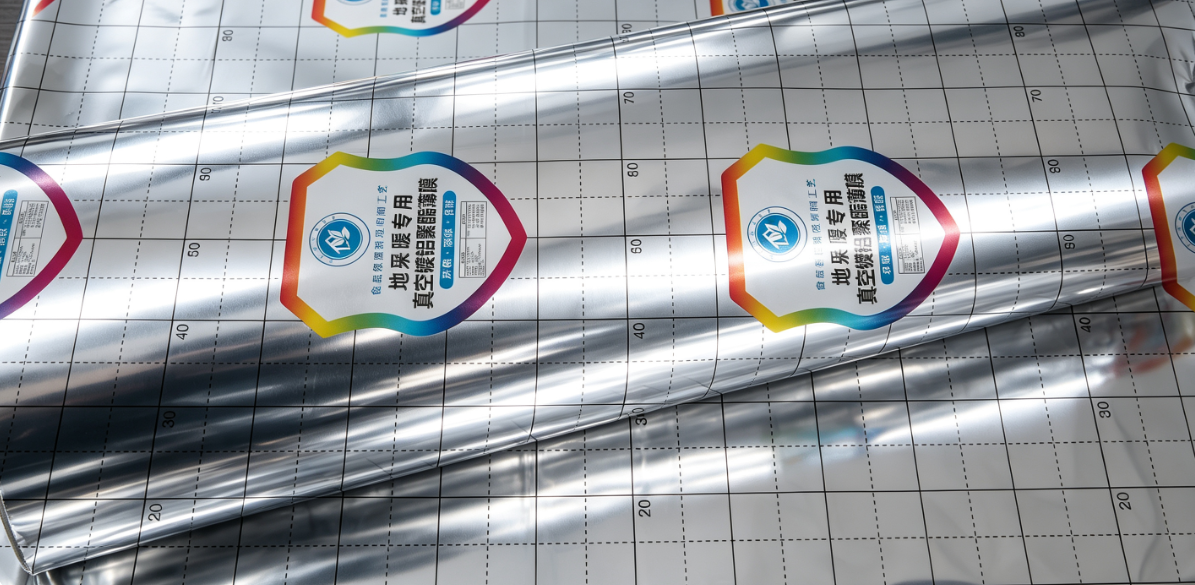
How reflective film works inside a floor build-up
The material is a low-emissivity barrier. When warm pipes or a heating element sit above it, the metalised surface sends a portion of radiant energy back upward instead of letting it soak into the concrete below. The effect is physical, not magical: the film lowers the emissivity of the surface it covers, so less heat radiates away from the heated zone. A reputable manufacturer will specify the aluminium or mirror layer in microns, because that figure, not the colour, drives performance. Our factory produces both aluminium foil laminated film and a brighter mirror-grade variant for projects where maximum reflectivity is requested by the specifier.
Cutting downward heat loss where it matters
On a ground floor or over an unheated basement, downward loss can dominate the energy balance. Building physics guidance shows that uncontrolled downward loss from an uninsulated screed takes a meaningful fraction of total output. Adding a reflective layer plus a separate insulation board underneath attacks that loss from two sides. The film alone will not replace proper insulation thickness, but as part of a layered build-up it reduces the temperature gradient pulling heat downward. Distributors supplying renovation jobs often specify film as a low-cost upgrade that pairs with existing insulation without ripping the floor out.
Faster warm-up and steadier room temperatures
Because less energy disappears below the floor, the surface above reaches target temperature sooner. In a timed or setback system that shortens the daily heating window, quicker response translates directly into lower consumption. Occupants also report fewer cold spots, since the upward radiant field is more even across the room. A supply partner that offers continuous staple strips and film together lets an installer fix pipework and lay the reflective layer in the same pass, which keeps labour time down on larger floor areas and reduces the risk of misalignment between trades.
Choosing the right grade from a supplier
Not every film is equal. Pure aluminium reflective film resists tearing better than thin spray-coated alternatives, and a laminated mesh backing improves dimensional stability during laying. For damp substrates, a polyethylene backing with sealed edges prevents wicking that would otherwise ruin the barrier. When you compare quotes, ask the manufacturer for the reflectivity rating, the basis weight, and whether the product carries a building-standard reference such as EN 1264 for radiant systems. A transparent factory will provide test data rather than vague claims about efficiency that cannot be verified on site.
Installation points installers should not skip
Lay the film with the reflective side facing up and overlap joints by at least 50 mm, taping them so gaps do not form during the pour. Avoid walking on unsupported film before the pipe is fixed, and keep it clear of standing water on green concrete. Where perimeter expansion strips meet the wall, let the film turn up slightly so the edge insulation and the reflective layer form a continuous envelope. These small steps protect the investment the supplier and the homeowner have both made, and they prevent the classic complaint of uneven rooms that no warranty clause can fully fix.
Pairing film with other components
A reflective layer performs best when the rest of the system is specified sensibly. Edge insulation strips stop heat escaping along the perimeter, while quality staples hold pipe spacing tight so the reflected energy is distributed evenly. A manufacturer that stocks the full accessory range, from silicone-crystal mesh to aluminium foil tape, lets a contractor source a matching kit rather than mixing brands that were never tested together. That compatibility is what keeps call-backs low and keeps distributors reordering from the same factory season after season.
Cost versus payback on a typical job
Specifiers sometimes treat film as a line they can cut to hit a budget, but the maths rarely supports that. The added material cost on a standard room is small against the pipe, the manifold, and the screed, while the recovered downward heat lowers pump and boiler run time across the system's life. A distributor quoting a full kit can show the customer a payback measured in a single heating season rather than years, which is a stronger sales argument than any brochure claim. Our factory prices film to sit comfortably inside that calculation, so the upgrade stays the obvious choice rather than the optional extra.
References
1. Energy Saving Trust - Floor insulation and underfloor heating: guidance for installers, United Kingdom, 2022.
2. British Standards Institution - BS EN 1264: Water-based surface embedded heating and cooling systems, 2021.
3. Chartered Institution of Building Services Engineers (CIBSE) - CIBSE Guide A: Environmental design, 2021.